Category: Artificial Intelligence

  • Stop Using AI for Tasks. Start Using AI for Leverage.

    Stop Using AI for Tasks. Start Using AI for Leverage.

    Alright 😄 let’s level this one up.

    This time, let’s focus on something practical and slightly bold — not hype, not fear… but strategy.


    🔥 Title Suggestion:

    “Stop Using AI for Tasks. Start Using AI for Leverage.”

    (Alternative title if you want something more visionary:)

    “AI Won’t Change Your Business Overnight — But It Will Change Who Wins.”


    🧠 Blog Content

    Introduction: Most People Are Using AI Wrong

    Right now, millions of professionals are using AI.

    They use it to:

    • Write emails
    • Generate captions
    • Create basic content
    • Fix grammar
    • Answer quick questions

    That’s fine.

    But that’s not transformation.

    That’s convenience.

    AI is not just a faster keyboard.

    It is a leverage engine.

    And the difference between convenience and leverage will define who grows in the next 5 years.


    1️⃣ Task Thinking vs Leverage Thinking

    Let’s understand the shift.

    ❌ Task Thinking:

    “Can AI write this for me?”

    ✅ Leverage Thinking:

    “How can AI multiply my output, insight, or decision-making power?”

    Task thinking saves minutes.

    Leverage thinking changes scale.

    For example:

    • A developer using AI to auto-complete code → saves time
    • A developer building AI-assisted internal tools → multiplies team efficiency
    • A marketer using AI for captions → saves effort
    • A marketer using AI for customer behavior analysis → improves conversion

    See the difference?

    One replaces effort.
    The other increases impact.


    2️⃣ AI as a Strategic Layer

    The smartest companies are not just “using AI tools.”

    They are embedding AI into workflows.

    They are asking:

    • Can AI analyze our customer patterns?
    • Can AI predict churn?
    • Can AI optimize internal processes?
    • Can AI reduce human bottlenecks?

    AI becomes a strategic layer, not a shortcut.

    And when AI becomes part of systems — not just daily tasks — that’s when real growth happens.


    3️⃣ The Compounding Effect of AI

    AI has a compounding nature.

    When you:

    • Train it with your data
    • Refine prompts
    • Improve workflows
    • Automate repetitive decisions

    It gets better.

    Your efficiency compounds.
    Your insights compound.
    Your speed compounds.

    But only if you treat AI like an investment — not entertainment.

    Random usage = random results.

    Structured integration = exponential results.


    4️⃣ The Real Opportunity for Entrepreneurs

    This is especially important for:

    • Startup founders
    • Tech leaders
    • Digital agencies
    • Product managers

    AI allows small teams to operate like large ones.

    What required:

    • 10 employees
    • 3 analysts
    • 2 content writers

    Can now be handled by:

    • A lean team with strong AI workflows

    But here’s the truth:

    AI does not replace strategic clarity.

    If your business model is weak,
    AI will only help you fail faster.

    AI amplifies what already exists.

    Strong foundation → faster growth
    Weak foundation → faster exposure


    5️⃣ The Future Competitive Landscape

    In the coming years, we will see three types of professionals:

    1. Those who ignore AI
    2. Those who casually use AI
    3. Those who strategically build with AI

    Category 3 will dominate.

    Not because they are smarter.

    But because they understand leverage.

    AI is the biggest productivity accelerator of this generation.

    But only for those who move beyond basic usage.


    Final Thought

    The question is not:

    “Are you using AI?”

    The real question is:

    “Is AI changing your scale, or just your speed?”

    Speed is helpful.

    Scale is transformative.

    And the people who understand this difference will not just survive the AI era —

    They will lead it.
  • The AI Paradox: Why Smarter Tools Are Creating Average Professionals

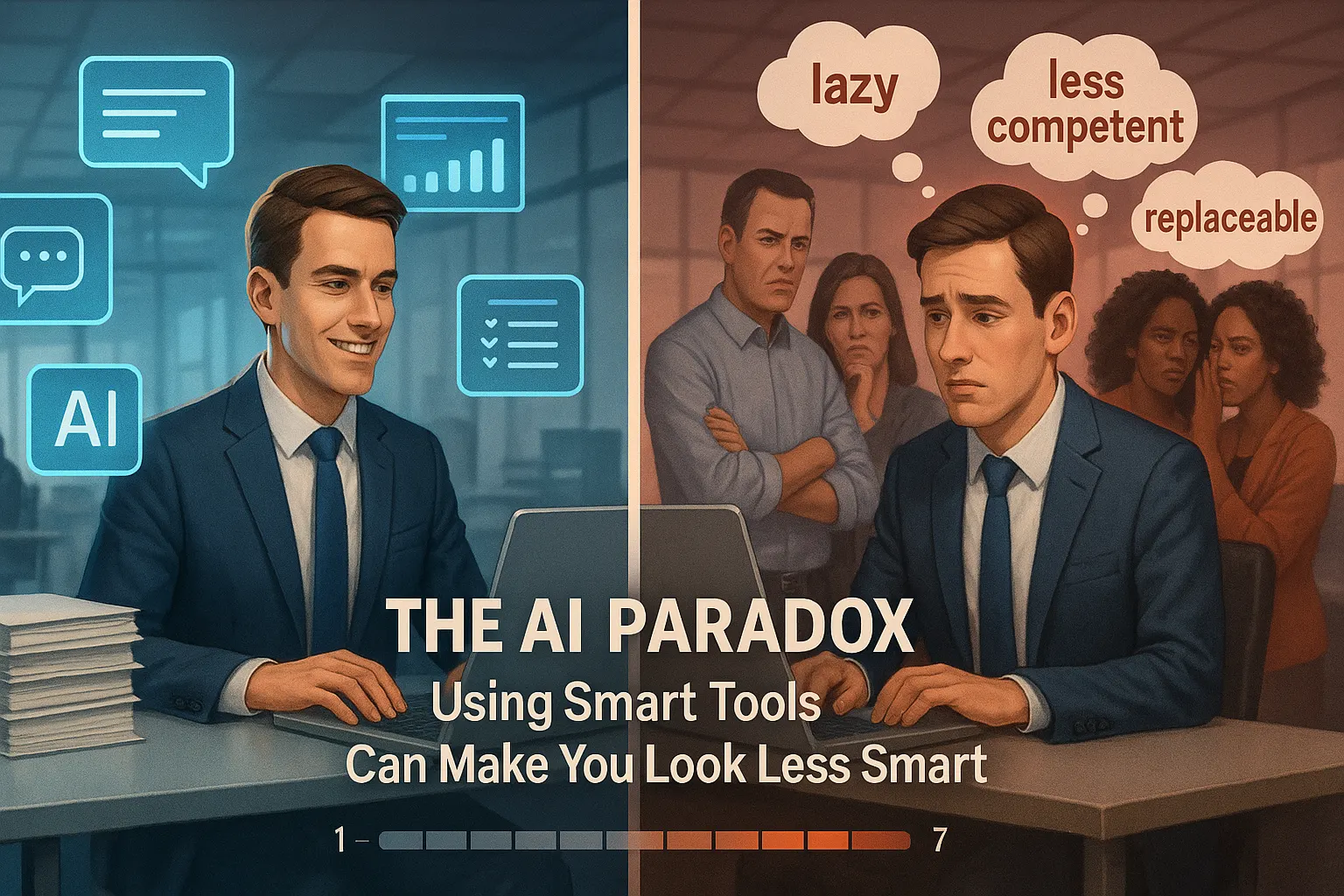
    The AI Paradox: Why Smarter Tools Are Creating Average Professionals

    Introduction: The Illusion of Intelligence

    Artificial Intelligence has made work easier than ever before.

    You can:

    • Generate a business plan in minutes
    • Write code without typing much
    • Create marketing campaigns instantly
    • Prepare for interviews in a few prompts
    • Design visuals without being a designer

    Productivity has skyrocketed.

    But here’s the uncomfortable question:

    Are we becoming more intelligent —
    or just more assisted?

    Because there is a subtle danger hidden inside convenience.


    1️⃣ AI Makes Output Easy — Thinking Hard

    In the past, creating something required:

    • Research
    • Analysis
    • Struggle
    • Revision
    • Reflection

    Today, AI gives you:

    • Structure
    • Suggestions
    • Content
    • Corrections

    But when AI removes friction,
    it can also remove depth.

    When you skip the struggle,
    you sometimes skip understanding.

    And without understanding,
    you produce average work — faster.


    2️⃣ The Rise of “AI-Polished Mediocrity”

    We’re entering an era where:

    Everyone’s resume sounds perfect.
    Everyone’s LinkedIn post sounds inspiring.
    Everyone’s website copy sounds strategic.

    But behind the polish, many lack real depth.

    AI can improve language.
    It cannot improve your actual experience.

    AI can structure ideas.
    It cannot replace original thinking.

    If everyone uses the same tools in the same way,
    we risk becoming professionally identical.

    And in business —
    being identical is dangerous.


    3️⃣ The Professionals Who Will Win

    Let’s be clear:

    AI is not the problem.

    Passive usage is.

    The professionals who will dominate this era are those who:

    ✔ Use AI for speed
    ✔ But think independently
    ✔ Question AI outputs
    ✔ Add personal insight
    ✔ Inject real-world experience

    They don’t copy-paste.
    They refine.
    They analyze.
    They challenge.

    They use AI as leverage — not as a crutch.


    4️⃣ AI and Leadership

    For business leaders, the challenge is even bigger.

    When teams rely heavily on AI:

    • Critical thinking may decline
    • Problem-solving ability may weaken
    • Creativity may become template-driven

    Leaders must encourage:

    🔹 AI-assisted execution
    🔹 Human-led strategy
    🔹 Data-driven decisions
    🔹 Experience-based judgment

    The strongest organizations will not be AI-powered.

    They will be AI-enhanced but human-directed.


    5️⃣ The New Competitive Edge

    In the AI era, the real differentiators will be:

    • Clear thinking
    • Decision-making ability
    • Emotional intelligence
    • Domain expertise
    • Ethical judgment

    Because AI can generate options.
    Only humans can choose wisely.

    AI can simulate creativity.
    Humans create from lived experience.

    AI can analyze patterns.
    Humans understand context.


    6️⃣ A Reality Check

    If you:

    • Cannot explain the output AI gave you
    • Cannot defend the strategy it suggested
    • Cannot execute without AI support

    Then you are not empowered.

    You are dependent.

    And dependency limits growth.

    Use AI to expand your capability —
    not replace your capability.


    Final Thought

    AI is one of the most powerful tools ever created.

    But tools do not define greatness.

    The carpenter does.

    The programmer does.

    The entrepreneur does.

    The leader does.

    AI will not decide your success.

    How you use it will.

  • AI Is Not the Future of Work. It’s the Present — And You’re Already Late.

    AI Is Not the Future of Work. It’s the Present — And You’re Already Late.

    Introduction: AI Is No Longer Optional

    A few years ago, Artificial Intelligence felt like a futuristic buzzword.
    Today, it’s sitting inside your browser, writing your emails, optimizing your code, screening resumes, generating designs, and even preparing candidates for job interviews.

    AI is no longer a “tech trend.”

    It is becoming a work habit.

    And the biggest shift?
    It’s not companies adopting AI.
    It’s individuals.


    1️⃣ The Silent Adoption Curve

    AI adoption didn’t explode through corporate boardrooms.

    It spread through:

    • Students refining assignments
    • Developers debugging faster
    • Marketers generating campaign ideas
    • Job seekers preparing for interviews
    • Designers brainstorming concepts

    Tools like ChatGPT, GitHub Copilot, Midjourney, and AI-powered analytics platforms have entered everyday workflows.

    What used to take:

    • 3 hours → now takes 30 minutes
    • 3 people → now takes 1
    • 10 revisions → now takes 2

    The productivity multiplier is real.

    But here’s the truth:

    AI does not replace professionals.
    It replaces professionals who refuse to evolve.


    2️⃣ AI in Hiring & Career Growth

    One of the most interesting transformations is happening in recruitment.

    Today, candidates are using AI to:

    • Optimize resumes for ATS systems
    • Practice interview questions
    • Improve communication clarity
    • Research company backgrounds
    • Simulate behavioral interview scenarios

    At the same time, companies are using AI to:

    • Screen resumes
    • Analyze skill matches
    • Conduct AI-based assessments
    • Predict candidate success

    This creates a new reality:

    AI vs AI in hiring.

    The advantage will not belong to the one using AI —
    It will belong to the one who uses it intelligently.

    AI can refine your resume.
    But it cannot replace real skills.

    AI can simulate interviews.
    But it cannot simulate your confidence.

    AI can suggest answers.
    But it cannot build your experience.


    3️⃣ AI in Business & Entrepreneurship

    For business leaders and entrepreneurs, AI is not just a tool — it’s leverage.

    AI is helping businesses:

    • Automate customer support
    • Generate marketing content
    • Predict customer behavior
    • Optimize operations
    • Analyze data at scale

    Small teams are now achieving what previously required large departments.

    Startups are launching faster.
    Developers are shipping features quicker.
    Marketing teams are testing campaigns at unprecedented speed.

    But this also raises a question:

    If AI gives everyone the same tools…
    What will differentiate you?

    The answer:
    Strategy, execution, and human thinking.


    4️⃣ The Real Risk: Dependency Without Understanding

    There’s a growing concern.

    Many professionals are:

    • Copying AI-generated answers without understanding
    • Depending on AI for decision-making
    • Losing analytical thinking ability

    AI should enhance intelligence, not replace it.

    Think of AI as:

    • A co-pilot, not the pilot
    • A brainstorming partner, not the final decision maker
    • A productivity booster, not a skill substitute

    If you cannot perform a task without AI,
    you are not using AI —
    you are dependent on it.

    And dependency is dangerous.


    5️⃣ The New Skill: AI Literacy

    In 2026 and beyond, the most valuable skill won’t be coding alone, marketing alone, or management alone.

    It will be:

    AI Literacy.

    Which means:

    • Knowing when to use AI
    • Knowing how to prompt effectively
    • Knowing how to verify outputs
    • Knowing its limitations
    • Knowing ethical boundaries

    The future belongs to:
    Professionals who combine domain expertise + AI efficiency.

    Not to those who blindly trust automation.


    6️⃣ What Should You Do Now?

    If you are:

    • A student → Learn how to use AI for research, not shortcuts.
    • A developer → Use AI for acceleration, not lazy coding.
    • A manager → Understand AI workflows before your competitors do.
    • A business owner → Integrate AI strategically, not randomly.

    Start small.

    Automate one task.
    Experiment with one AI workflow.
    Analyze the results.
    Improve.

    That’s how transformation happens.


    Final Thought

    AI is not coming.

    It’s here.

    The question is not:

    “Will AI take my job?”

    The better question is:

    “Am I using AI better than the person competing with me?”

    Because in this new era,
    the competition is not human vs AI.

    It’s
    Human + AI vs Human without AI.

    And that gap is growing every day.

  • How AI Is Transforming Digital Products

    How AI Is Transforming Digital Products

    Artificial Intelligence is rapidly becoming a core component of modern digital products. From personalized recommendations to automated decision-making, AI is changing how users interact with technology.

    One of the most visible applications of AI is personalization. AI systems analyze user behavior and preferences to deliver tailored content, product suggestions, and experiences that feel relevant and engaging.

    AI-powered chatbots and virtual assistants have significantly improved customer support. They provide instant responses, reduce operational costs, and ensure users receive help at any time.

    In product development, AI helps optimize workflows by automating testing, predicting issues, and analyzing large datasets. This leads to faster development cycles and higher-quality products.

    Industries such as healthcare, finance, education, and e-commerce are heavily adopting AI-driven solutions to improve efficiency and accuracy.

    As AI technology continues to advance, digital products will become smarter, more intuitive, and deeply integrated into everyday life.